
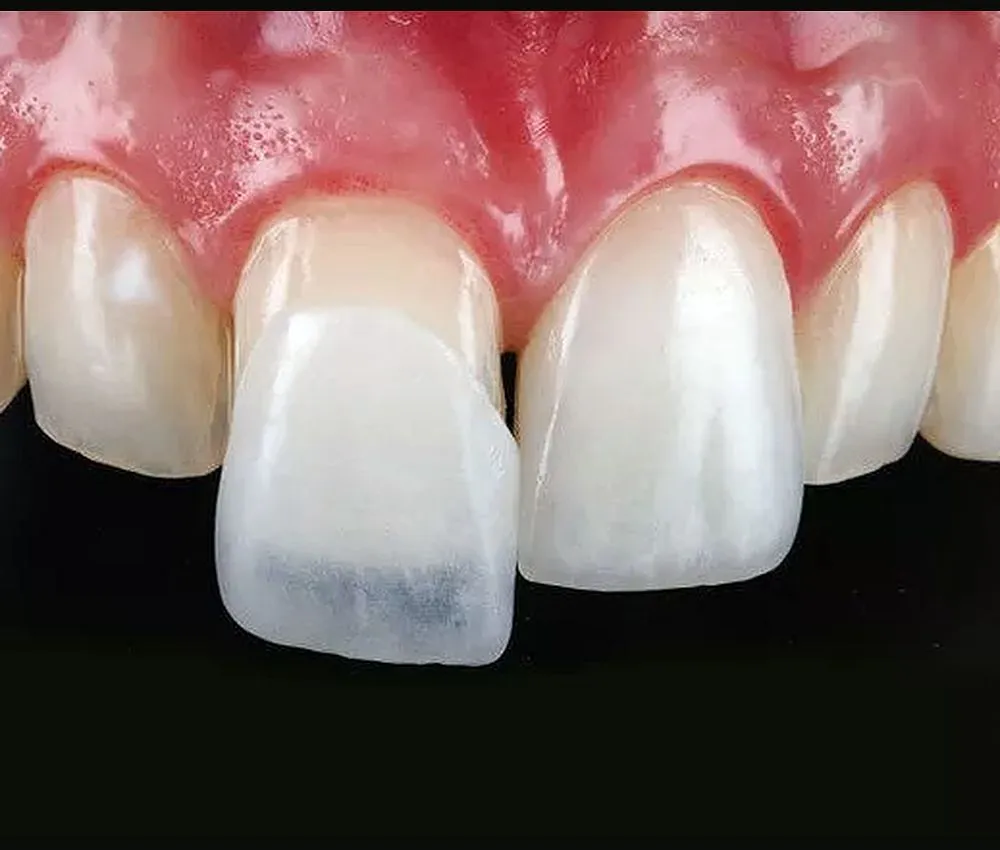

What are the best dental veneers?
In general terms, porcelain veneers are usually considered the best for their excellent aesthetics, durability, and long lifespan. However, this does not mean they are the ideal option for all patients.
Depending on your needs, other alternatives such as resin veneers or ultra-thin veneers can also provide excellent results.
The choice should always be made after an evaluation with a dentist specialized in cosmetic dentistry.
Types of dental veneers
Currently, there are three main types of dental veneers.
Each one has different characteristics.
1️⃣ Porcelain Veneers ⭐ (The most recommended option)
Porcelain veneers are considered by many specialists to be the best alternative when seeking a highly aesthetic and durable result.
They are custom-made in a dental laboratory and then bonded to the tooth.
✅ Advantages
✔ Very natural appearance.
✔ Do not easily change color.
✔ Great resistance to wear.
✔ Excellent shine.
✔ Approximate lifespan of 10 to 15 years or more with proper care.
❌ Disadvantages
- Higher price.
- Generally require slight enamel wear.
- Need two or more appointments.
💡 They are ideal for those who want a long-term solution with the best aesthetic result.
2️⃣ Resin Veneers
Resin veneers are made with dental composite and are shaped directly on the tooth during the appointment.
They are currently one of the most requested treatments due to their good balance between quality, aesthetics, and price.
✅ Advantages
✔ More economical.
✔ Placed quickly.
✔ Little or no dental wear.
✔ Easy to repair.
✔ Immediate results.
❌ Disadvantages
- Shorter lifespan than porcelain.
- Can stain over time.
- Require periodic polishing.
Their lifespan is usually 3 to 7 years, depending on the patient’s care.
3️⃣ Ultra-thin or No-Prep Veneers
Also known as minimally invasive veneers, they stand out for preserving the dental enamel almost intact.
They are made with very fine and durable ceramic materials.
✅ Advantages
✔ Do not require wear or this is minimal.
✔ Preserve the natural structure of the tooth.
✔ Excellent aesthetics.
✔ Conservative procedure.
❌ Disadvantages
- Not suitable for all cases.
- Higher cost.
- Require proper patient selection.
Comparison of the best dental veneers
| Feature | Porcelain | Resin | Ultra-thin |
|---|---|---|---|
| Aesthetics | ⭐⭐⭐⭐⭐ | ⭐⭐⭐⭐ | ⭐⭐⭐⭐⭐ |
| Duration | 10-15 years | 3-7 years | 10-15 years |
| Stain Resistance | Excellent | Good | Excellent |
| Dental Wear | Low | Minimal | Very low |
| Price | High | More economical | High |
| Repair | Limited | Easy | Limited |
How to choose the best dental veneers?
The best choice will depend on several factors.
The dentist will evaluate aspects such as:
- Condition of your teeth.
- Amount of enamel available.
- Dental color.
- Type of bite.
- Habits such as bruxism.
- Aesthetic goals.
- Budget.
Therefore, the ideal treatment may vary from patient to patient.
Benefits of the best dental veneers
Dental veneers offer numerous advantages when placed by a specialist.
Among their main benefits are:
✅ Improve the appearance of the smile.
✅ Correct aesthetic imperfections.
✅ Increase confidence when smiling.
✅ Achieve natural results.
✅ Allow customization of the shape, size, and color of the teeth.
✅ Offer a relatively quick treatment.
Additionally, when properly maintained, they can retain their appearance for many years.
❓ Frequently asked questions
Porcelain veneers usually offer the most natural result due to their translucency and color stability. However, resin veneers can also provide excellent aesthetics when performed by a specialist.
Porcelain veneers and ultra-thin ceramic veneers typically last between 10 and 15 years, while resin veneers have an approximate lifespan of 3 to 7 years.
It depends on the type of veneer. Resin veneers generally require very little wear, while porcelain veneers may need minimal preparation. Ultra-thin veneers usually preserve almost all of the enamel.
Resin veneers represent an excellent alternative for those looking to improve their smile at a lower cost with very satisfactory aesthetic results.


