


The non-screw dental implants, also known as non-invasive surgical dental implants, are a less invasive alternative compared to traditional titanium screw implants that are inserted into the bone. This type of implant, also called basal implant or cortical anchorage implant, is designed to provide a viable option for patients who have little bone mass or who do not wish to undergo bone graft surgery or extensive surgical procedures.
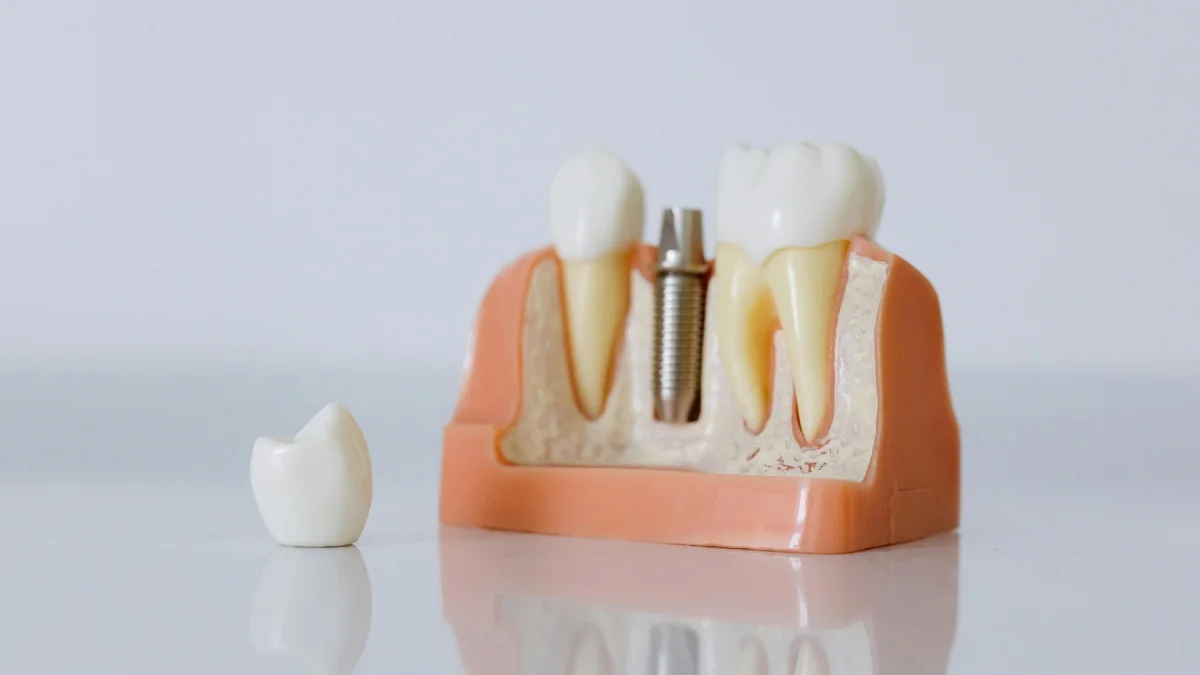
Below, I detail the different types and characteristics of non-screw dental implants, their advantages, and considerations.
Types of non-screw dental implants
Although the term “non-screw” may suggest that no type of component is inserted into the bone, in reality, these systems can include implants that do not require the traditional screw but use other fixation mechanisms. Here I explain the most relevant types:
1. Basal Implants (Cortical Basal Implants)
The basal implants, also known as cortical implants, are an alternative to traditional implants. Instead of being placed in the spongy part of the maxillary or mandibular bone, they are anchored in the denser cortical part of the bone. These implants are thinner and can be inserted without the need for bone grafts, making them an option for patients with severe bone loss.
- Material: Generally made of titanium.
- Placement: They are placed in the cortical bone (the densest part of the bone) instead of the spongy bone.
- Use: Ideal for patients who have experienced significant bone loss, avoiding the need for bone grafts.
- Advantages: They do not require bone grafts, allow for immediate loading (i.e., the patient can receive the fixed prosthesis in a short period of time).
- Disadvantages: Not all cases are suitable for this type of implant, and their placement requires a dental implant specialist surgeon in this technique.
2. Pterygoid Implants
The pterygoid implants are a variant of basal implants that are placed in the pterygoid area of the upper jaw, near the pterygoid bone. They are used for patients who have very little bone in the back of the upper jaw and do not wish to undergo a bone graft.
- Material: Titanium.
- Placement: In the pterygoid bone, behind the upper molars.
- Use: Primarily for patients with severe bone atrophy in the upper jaw.
- Advantages: They avoid bone grafting, providing a quick and fixed solution for patients with significant bone loss.
- Disadvantages: More complicated procedure than conventional implants, and requires an experienced surgeon.
3. Disk Implants
The disk implants are flat and wide implants that are anchored in the cortical surfaces of the jaws. They are especially used in patients who have little bone in the jaw or maxilla, and are placed using minimally invasive techniques.
- Material: Titanium.
- Placement: In the cortical bone, similar to basal implants.
- Use: For patients with severe bone atrophy who cannot receive traditional implants.
- Advantages: They can be inserted without the need for bone grafts or complex procedures, allowing for rapid rehabilitation.
- Disadvantages: Less common and require a dental implant specialist surgeon.
Advantages of non-screw implants
- No bone grafts required: Basal implants and other types of non-screw implants are designed to utilize the densest areas of the bone, avoiding the need for bone grafts.
- Immediate loading: In many cases, a temporary or permanent fixed prosthesis can be placed shortly after the implants are placed, allowing the patient to quickly regain functionality.
- Less invasive procedures: Some non-screw implants can be placed without the need for complex surgical interventions, reducing recovery time and discomfort.
- Alternative for patients with low bone mass: These implants are specifically designed for patients with low bone density, making them an excellent alternative when traditional implants are not viable.
Considerations and disadvantages
- Not suitable for all patients: Although these implants may be an option for many patients with bone loss, not all are candidates. A dental surgeon must evaluate whether the patient is suitable for this type of implant.
- Greater specialization: Non-screw implants require highly trained and experienced dental implant specialists in advanced implantology techniques.
- Cost: In some cases, these implants may be more expensive due to the technology and skill required to place them.
Non-screw dental implants, such as basal, pterygoid, and disk implants, represent innovative and effective solutions for patients with severe bone loss or who wish to avoid more invasive procedures such as bone grafts. By anchoring in the densest parts of the bone, these implants allow for faster rehabilitation, offering an excellent alternative to traditional dental implants. Their advanced design ensures functionality and aesthetics, significantly improving the quality of life for patients.
If you are considering dental implants and have low bone mass, we recommend visiting a dental center specialized in advanced implantology. The dental center of Dr. Andrea Contreras, with two locations in Lima, offers modern and personalized treatments, ensuring professional care and optimal results. Dr. Contreras and her team have the experience and technology necessary to evaluate your case and offer you the most suitable solution. Schedule your consultation and take the first step towards a renewed and healthy smile!
Dental implant offers
We are giving you a 10% discount, plus a free consultation


