


Dental implants are an advanced and permanent solution for replacing lost teeth. They consist of small titanium or zirconium screws that are inserted into the maxillary or mandibular bone and act as an artificial root on which a crown, bridge, or fixed denture is placed. Dental implants not only restore chewing function but also improve aesthetics and overall oral health, as they prevent bone loss.
In this guide, we will explore the types of dental implants that exist, their characteristics, advantages, and the approximate prices for each type of procedure.
What is a dental implant?
A dental implant is a metal screw, usually made of titanium, that is inserted into the bone of the jaw or maxilla to replace the root of a lost tooth. Once the implant is placed, and after a healing period during which the bone integrates with the implant (osseointegration), a crown, bridge, or fixed prosthesis is placed on it, restoring both the aesthetics and functionality of the mouth.
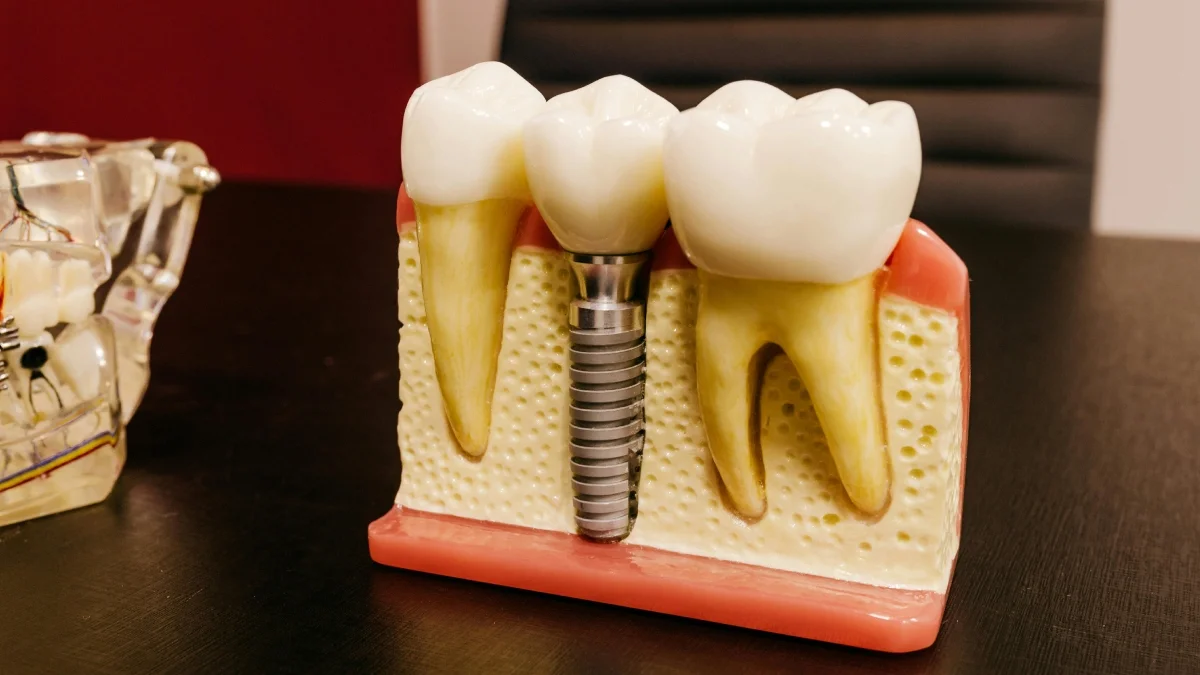
Components of a dental implant
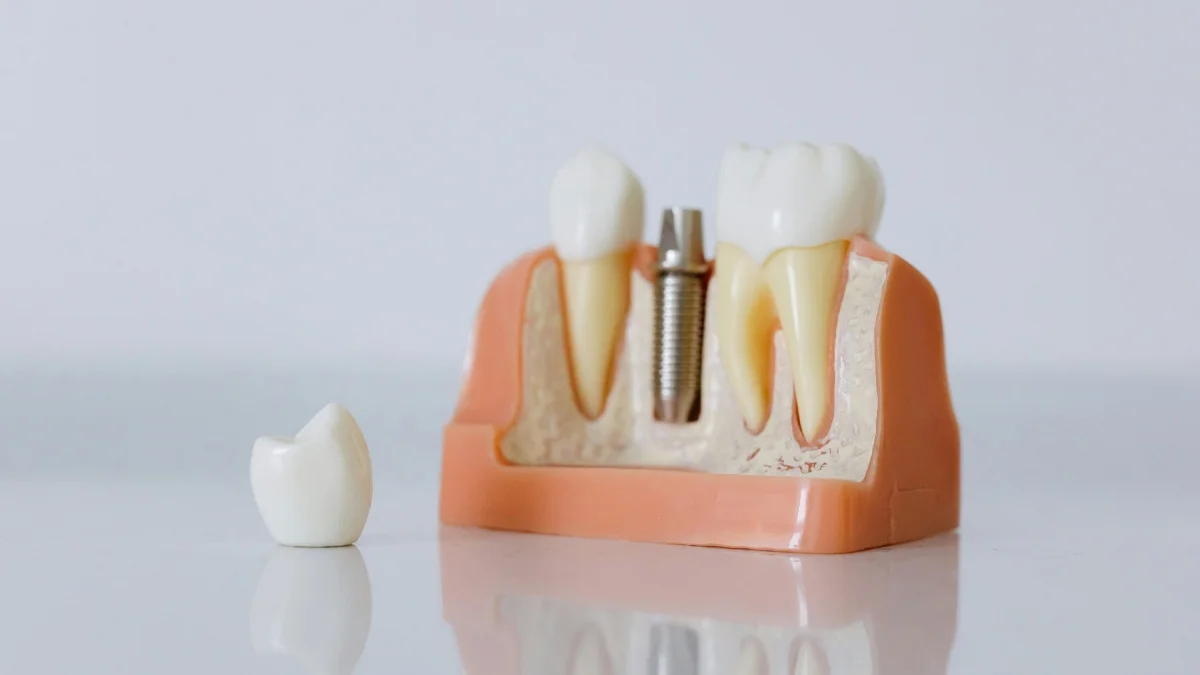
A dental implant generally consists of three parts:
- The implant: The screw that is inserted into the bone.
- The abutment (or connector): The piece that connects the implant with the crown or prosthesis.
- The crown or prosthesis: The visible piece that replaces the tooth.
Types of dental implants
There are several types of dental implants, and the choice of the appropriate type depends on factors such as the amount of available bone, the patient’s health status, the number of teeth that need to be replaced, and personal preferences. Below, I will describe the most common types of dental implants.
1. Endosseous Implants (or Screw Implants)
Endosseous implants are the most common type of dental implants and are placed directly in the maxillary or mandibular bone. These implants are screw-shaped, cylindrical, or blade-like, and can be used to support a single crown, a bridge, or a complete fixed prosthesis.
- Materials: Generally made of titanium or zirconium, biocompatible materials that integrate well with bone.
- Use: Ideal for most cases where there is enough bone to insert the implant.
- Procedure: After the insertion of the implant, a healing time (from 3 to 6 months) is required for the implant to fuse with the bone (osseointegration).
Approximate price:
- An endosseous implant with a crown can cost between S/ 4,000 and S/ 10,000 per tooth, depending on the material and the dentist.
2. Subperiosteal Implants
Subperiosteal implants are placed on top of the maxillary or mandibular bone but beneath the gums. Instead of inserting the screw into the bone, a metal framework is placed over the bone, and the gums are closed over it. This type of implant is less common and is generally used when the patient does not have enough bone to support an endosseous implant and does not wish to undergo bone grafting.
- Materials: The framework is generally made of titanium, which is biocompatible.
- Use: Suitable for patients with significant bone loss who cannot undergo a bone graft.
- Procedure: The framework is fitted to the bone structure and, once healed, crowns or prostheses are attached to the posts that protrude from the gums.
Approximate price:
- The cost of a subperiosteal implant is generally higher than that of an endosseous implant and can range from S/ 8,000 to S/ 12,000 per tooth.
3. Zygomatic Implants
Zygomatic implants are a special type of implant that is placed in the zygomatic bone (the cheekbone) instead of the maxilla. This type of implant is used when there is severe bone loss in the upper jaw and it is not possible to place conventional endosseous implants without extensive bone grafting.
- Materials: Generally made of titanium.
- Use: Ideal for patients with extreme bone loss in the upper jaw who cannot undergo bone graft procedures.
- Procedure: They are longer than conventional implants and require more complex surgery. They are often used in combination with other implants.
Approximate price:
- Due to the complexity of the procedure, zygomatic implants are more expensive, with prices ranging from S/ 15,000 to S/ 25,000 per arch.
4. All-on-4 Implants
The All-on-4 system is a technique in which four implants are placed in the jaw or maxilla to support a complete fixed dental prosthesis. It is an excellent option for people who have lost most or all of their teeth in an arch and want to avoid the use of removable dentures. Bone grafting is often not required, as the implants are placed at specific angles to make the most of the available bone.
- Materials: The implants are made of titanium and the prosthesis can be made of acrylic, porcelain, or zirconium.
- Use: Ideal for people with complete or severe dental loss in an arch.
- Procedure: The implants are placed in one surgery, and in many cases, a temporary prosthesis is placed on the same day.
Approximate price:
- The All-on-4 treatment for a complete arch can cost between S/ 25,000 and S/ 45,000, depending on the type of prosthesis used, dental prosthesis specialist, and the complexity of the case.
5. Mini Dental Implants
Mini dental implants are smaller implants compared to traditional endosseous implants. They are often used to stabilize removable dentures or in cases where there is not enough bone to support a standard implant. They are not as robust as conventional implants, but they can be a good option for certain situations.
- Materials: Generally made of titanium.
- Use: Ideal for stabilizing removable prostheses or as a temporary solution.
- Procedure: Less invasive and with a shorter recovery time than traditional implants.
Approximate price:
- Mini implants are usually more affordable, with prices ranging from S/ 2,500 to S/ 5,000 per implant.
Factors influencing the price of dental implants
The cost of dental implants can vary depending on a number of factors:
- Type of implant: Zygomatic or All-on-4 implants tend to be more expensive due to the complexity of the procedure.
- Materials used: Zirconium implants, for example, are more expensive than titanium ones. Likewise, porcelain or zirconium crowns are priced higher than acrylic ones.
- Number of teeth replaced: The more teeth that need to be replaced, the higher the cost.
- Geographical location: Prices may vary depending on the city or country where the treatment is performed.
- Dentist’s experience: Dentists with more experience or specialization may charge higher fees.

Advantages of dental implants
Dental implants offer numerous advantages compared to other dental replacement methods, such as removable prostheses or fixed bridges:
- Stability: By integrating directly with the bone, implants provide a solid foundation for crowns or prostheses.
- Durability: With proper care, implants can last a lifetime.
- Prevention of bone loss: Implants stimulate the jaw or maxillary bone, helping to prevent the bone loss that naturally occurs after tooth loss.
- Comfort and functionality: Implants feel and function like natural teeth, improving the ability to chew and speak normally.
- Aesthetics: Crowns on implants are designed to resemble natural teeth, enhancing the patient’s aesthetic appearance.
Dental implants in Lima are an excellent option for permanently replacing lost teeth, offering a solution that not only improves aesthetics but also functionality and overall oral health. Depending on your needs and conditions, there are different types of dental implants available, such as endosseous implants, zygomatic implants, All-on-4, and mini implants. Each has its own cost and process, so it is important to consult with a dentist specialized in dental implants in Lima or dental prostheses in Lima to determine which is the best option for you.
If you are considering dental implants, I recommend scheduling a consultation with an implantology specialist to discuss options that suit your needs and budget.
Dental implant offers
We give you a 10% discount, plus a free consultation


