
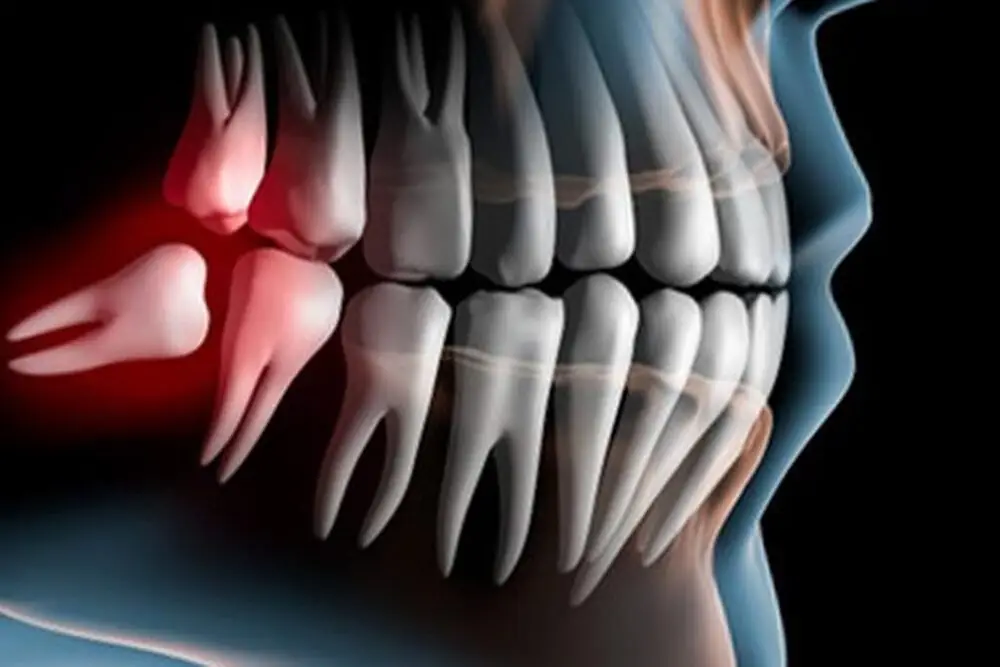

The wisdom tooth extraction is a common dental procedure performed to prevent or resolve problems caused by these teeth. Wisdom teeth, also known as third molars, usually erupt between the ages of 17 and 25, but often do not have enough space to emerge properly, which can lead to various complications.
🦷 When is it necessary to extract the wisdom tooth?
Not all wisdom teeth need to be extracted. However, dentists recommend extraction in the following cases:
✅ Impacted teeth: When they cannot fully emerge or grow in an incorrect position.
✅ Pain and swelling: They can cause constant discomfort in the jaw or gums.
✅ Infections and cavities: They are difficult to clean and can promote the accumulation of bacteria.
✅ Damage to other teeth: If they push against adjacent teeth and cause crowding.
✅ Cysts or infections: In some cases, they can develop cysts in the jaw.
зуб How is the tooth extraction procedure performed?
The extraction can be simple or surgical, depending on the position of the tooth:
🔹 Simple extraction: Local anesthesia is used, and it is extracted with dental tools if the tooth has fully emerged.
🔹 Surgical extraction: A small incision is made in the gum, and it may be necessary to cut the tooth into pieces. In this case, local anesthesia or sedation is used.
The procedure usually lasts between 30 and 60 minutes, and in complex cases, it may take a little longer.
| Type of Extraction | Characteristics | Procedure Time |
|---|---|---|
| Simple Extraction | Local anesthesia, use of dental tools | 30 minutes |
| Surgical Extraction | Incision in the gum, possible cutting of the tooth | 60 minutes or more |
🦷 Care after extraction
After the extraction, it is important to follow certain care instructions to avoid infections or complications:
🦷 Apply ice to the area to reduce swelling.
🦷 Avoid hard or hot foods for the first few days.
🦷 Do not smoke or drink alcohol, as they can delay healing.
🦷 Maintain good oral hygiene, but do not brush directly on the operated area.
🦷 Take the pain relievers and antibiotics prescribed by the dentist.
📌 How long does it take to heal?
Recovery varies by patient, but generally:
📌 First 3 days: Swelling and possible mild bleeding.
📌 First week: Formation of the healing clot.
📌 2 weeks: Disappearance of most symptoms.
📌 1 month or more: Complete recovery of the area.
| Recovery Stage | Symptoms | Recommendations |
|---|---|---|
| First 3 days | Swelling, possible mild bleeding | Apply ice, rest |
| First week | Formation of the healing clot | Avoid hard foods, maintain oral hygiene |
| 2 weeks | Disappearance of most symptoms | Continue care, avoid exertion |
| 1 month or more | Complete recovery of the area | Consult the dentist if there are doubts |
🌟 What to do if you feel intense pain after surgery?
If you feel intense pain, fever, or excessive swelling after surgery, it is essential to consult the dentist. These symptoms may indicate complications that require immediate medical attention.

The extraction of the wisdom tooth is a safe and necessary procedure in many cases to avoid future dental problems. If you feel discomfort or have doubts, it is best to see a dentist for an evaluation. Your oral health is important!


